Securing high rankings on search engines often feels like an endless race to build external authority. Many website owners spend countless hours pitching guest posts and begging for mentions. There is, however, a massive, untapped resource sitting right inside your own website. By optimizing the way your pages connect to one another, you can drive significant traffic growth and build authority from within. Partnering with expert SEO Services can help you build this foundation, turning your website into a consistent growth engine.
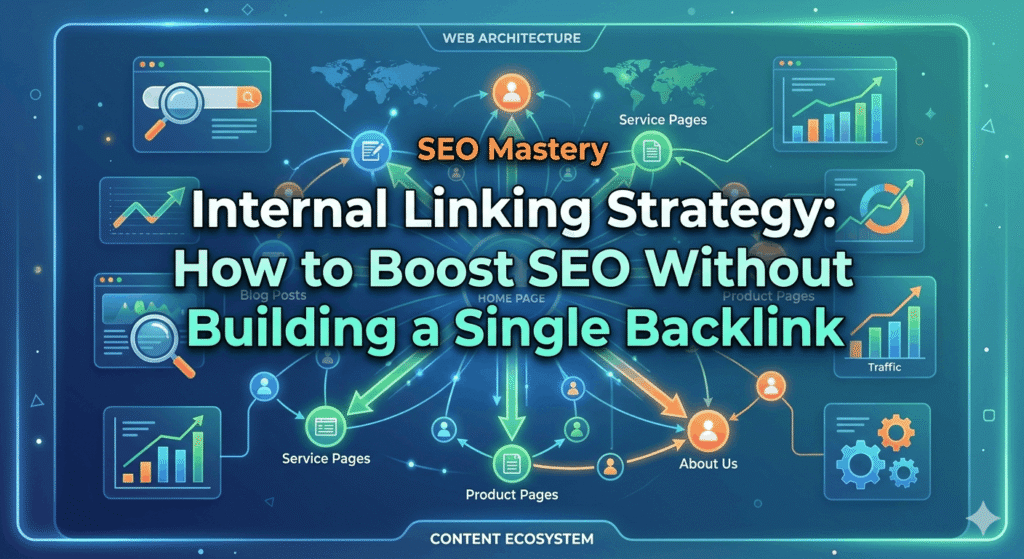
Internal linking is the practice of strategically placing hyperlinks that point from one page on your domain to another page on that exact same domain. These links serve as a roadmap for both human visitors and search engine crawlers. A strong internal link architecture helps users navigate your site seamlessly while distributing ranking power to your most valuable pages. You do not need to rely entirely on external websites to tell search engines which of your pages matter most.
By mastering this strategy, you can boost your organic visibility without building a single new backlink. This guide will walk you through the core principles of internal linking, the best practices for structuring your website, and advanced techniques to outrank your competition.
Understanding the Core Principles of Internal Linking
To leverage internal links effectively, you must understand how they function behind the scenes. Search engines rely on these connections to make sense of your website.
How Search Engines Use Internal Links
Search engine bots crawl the internet by following links. When a crawler lands on your homepage, it uses the links on that page to discover your categories, blog posts, and service pages. A site with a poor linking structure leaves important pages hidden from crawlers. If a bot cannot find a page through a link, it will not index it. Proper linking ensures that every valuable piece of content on your site is crawled, indexed, and evaluated for search rankings.
The Role of Anchor Text
Anchor text is the clickable, visible text in a hyperlink. Search engines use this text to understand the context of the destination page. If you link to a page about dog training using the anchor text “how to train a puppy,” you send a strong signal about the topic of that specific page. Using descriptive, natural anchor text helps algorithms rank your pages for relevant search queries.
Link Equity Distribution
Every page on your website has a certain amount of authority, often referred to as link equity. When you link from a high-authority page to a lower-authority page, you pass some of that ranking power along. Strategic internal linking allows you to funnel equity from your most popular posts directly to your key conversion pages, lifting their rankings in the process.
Types of Internal Links
Not all links serve the same purpose. Your website uses different types of links to guide users and structure information.
Navigational Links
These are the primary links found in your main menu. They help users find the most important sections of your website, such as your “About Us” page, service categories, and contact information. Navigational links appear on almost every page of your site, signaling to search engines that these destinations are structural pillars of your business.
Contextual Links
Contextual links are placed directly within the body text of your content. They point users to related articles, resources, or product pages. Because they are surrounded by relevant text, search engines give contextual links significant weight. These links are highly effective for passing link equity and establishing topical authority.
Footer Links
Footer links sit at the very bottom of your web pages. They typically house links to your privacy policy, terms of service, careers page, and secondary resources. While they do not pass as much SEO value as contextual links, they ensure that essential administrative pages are easily accessible to both users and crawlers.
Sidebar Links
Sidebar links are often used to highlight popular posts, recent articles, or specific product categories. They provide a quick way for users to discover more content without scrolling back to the main navigation menu. Use sidebar links to keep visitors engaged and reduce your overall bounce rate.
Developing a Strategic Internal Linking Plan
A successful SEO strategy requires a clear plan. You need to map out how your content connects before you start adding links randomly.
Auditing Your Current Internal Link Structure
Begin by auditing your existing website. You can use tools like Google Search Console or specialized SEO crawlers to identify how your links are currently distributed. Look for pages that have very few links pointing to them. Identify your highest-performing pages and analyze where they are sending their link equity. This audit provides a baseline for your new strategy.
Identifying Pillar Content and Supporting Content
Pillar content consists of comprehensive, long-form guides that cover a broad topic in detail. Supporting content includes shorter, more specific articles that address subtopics. Identify your main pillar pages and the related supporting posts. Your goal is to establish a clear hierarchy where supporting articles push authority up to your core pillars.
Mapping Out Your Content Silos
Content silos organize your website into distinct topical categories. If you run a digital marketing blog, you might have separate silos for email marketing, social media, and local SEO. Within each silo, the articles should link extensively to one another. Keep links between different silos to a minimum. This tight grouping builds topical authority and helps search engines understand your specific areas of expertise.
Best Practices for Internal Linking
Adding links to your content is simple, but doing it correctly requires discipline. Follow these best practices to maximize your SEO results.
Using Relevant Anchor Text
Always use anchor text that accurately describes the target page. Avoid generic phrases like “click here” or “read more.” Instead, use variations of the target page’s main keyword. If you are linking to a guide on generative engine optimization, use anchor text like “learn about GEO” or “generative engine optimization strategies.” Mix up your anchor text variations to keep your profile looking natural.
Linking Deeply Within Your Site
Many websites make the mistake of only linking to their homepage or top-level service pages. You should focus on deep linking, which means linking to pages buried deeper within your site architecture. Point links to specific blog posts, case studies, and individual product pages. Deep linking spreads authority throughout your entire domain and helps index obscure pages.
Avoiding Over-Optimization
While relevant anchor text is important, using the exact same keyword every single time can trigger spam filters. Search engines look for natural linking patterns. Use synonyms, partial matches, and related phrases. Do not force links into sentences where they do not belong. If a link does not provide value to the reader, leave it out.
Maintaining a Natural Link Profile
A natural link profile includes a healthy mix of navigational, contextual, and deep links. Space your links out naturally within your content. A good rule of thumb is to include two to five internal links for every thousand words of text. Focus on the user experience first. If a link helps the reader find more relevant information, it will likely help your SEO.
Advanced Internal Linking Techniques
Once you master the basics, you can apply advanced tactics to gain an edge over your competitors.
Utilizing Content Audits for Link Opportunities
Perform regular content audits to uncover hidden opportunities. Search your website for specific keywords and find older posts that mention topics you recently wrote about. Add links from those older, established posts to your new content. This instantly gives your fresh articles an initial boost in authority and helps them rank faster.
Implementing Internal Linking Tools
Managing links on a large website can become overwhelming. There are several automated internal linking tools and AI plugins available to streamline the process. Tools like Link Whisper, Yoast SEO, and Sitebulb can suggest relevant link opportunities as you write. They can also highlight broken links and analyze your overall link distribution, saving you hours of manual labor.
Monitoring and Adjusting Your Strategy
Search engine algorithms change, and so does user behavior. You must continuously monitor your internal linking strategy. Track how changes in your link structure impact your keyword rankings. If a specific pillar page begins to drop in the search results, try pointing a few more high-quality internal links toward it. SEO is an ongoing process of testing, learning, and refining.
Measuring the Impact of Your Internal Linking Strategy
You cannot improve what you do not measure. Tracking the right metrics allows you to see exactly how your linking efforts are paying off.
Key Metrics to Track
Pay close attention to user engagement metrics. Track your average time on page and your bounce rate. Effective internal linking should decrease your bounce rate as users click through to additional articles. You should also monitor your crawl stats to ensure search engine bots are navigating your site efficiently and discovering new pages quickly.
Using Google Analytics and Search Console
Google Analytics provides detailed insights into user behavior. Use it to see which internal links users click the most. Google Search Console is your best tool for tracking search performance. Use the “Links” report in Search Console to view your top internally linked pages. Ensure your most critical business pages are at the top of that list.
Correlating Internal Linking with Ranking Improvements
When you add new internal links to a target page, annotate that change in your analytics platform. Monitor the organic traffic and keyword rankings for that specific page over the following weeks. You should begin to see a positive correlation between strategic internal link placement and upward movement in the search engine results pages.
Common Internal Linking Mistakes to Avoid
Even experienced marketers make mistakes. Avoid these common errors to keep your website functioning smoothly.
Orphaned Pages
An orphaned page is a page that has absolutely zero internal links pointing to it. Search engines cannot find orphaned pages easily, and users will never stumble across them naturally. Use a website crawler to identify any orphaned pages on your domain. Once you find them, immediately add contextual links from relevant posts to bring them back into your site’s ecosystem.
Broken Links
Over time, you will inevitably delete old pages or change your URL structures. This creates broken internal links, resulting in frustrating 404 error pages for your users. Broken links waste crawl budget and damage your user experience. Run regular site audits to detect broken links and either remove them or redirect them to active, relevant pages.
Excessive Internal Links on a Single Page
Search engines divide link equity among all the links on a given page. If you place one hundred internal links on a single blog post, each link passes only a tiny fraction of authority. Too many links also overwhelm the reader. Keep your links focused, relevant, and limited to a reasonable number to ensure maximum impact.
Unleash the Long-Term Power of Strategic Internal Links
Optimizing your internal links is one of the most cost-effective and controllable SEO tactics available today. By auditing your current structure, identifying your pillar content, and using descriptive anchor text, you can guide search engines directly to your most valuable pages. You improve the user experience, distribute link equity efficiently, and boost your rankings across the board.
Focus on creating a logical, tight-knit architecture that builds topical authority over time. Avoid common pitfalls like orphaned pages and over-optimized anchor text. Regularly monitor your analytics to see how your changes impact organic traffic. A well-executed internal linking strategy yields compound returns, growing your search visibility month after month.
Take action today. Open up your highest-traffic blog post and find three relevant, deep pages to link to. If you want to scale your efforts and future-proof your website against algorithm updates, consider partnering with a dedicated team. Expert optimization ensures your brand stays visible exactly where your customers are searching.